Elmo
Elmo is an open source platform that tracks and optimizes your brand's visibility across every major AI model.
Visit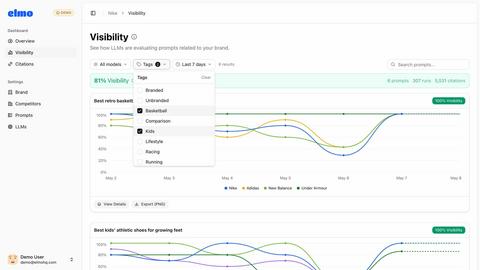
About Elmo
Elmo is an open-source, self-hosted platform designed to give brands and marketing professionals complete control over monitoring their visibility across any AI model. In an era where large language models (LLMs) like ChatGPT, Claude, Gemini, and Perplexity increasingly shape consumer perception and brand discovery, Elmo provides the essential infrastructure to track how AI systems talk about your brand. The platform allows users to monitor mentions, analyze citations, and benchmark competitors across a comprehensive range of AI models, including ChatGPT, Claude, Gemini, Grok, Mistral, Perplexity, Copilot, DeepSeek, and Google AI Overviews. Elmo is purpose-built for brand managers, SEO professionals, and marketing teams who need to understand and optimize their brand's presence in AI-generated responses. The core value proposition lies in its open-source, self-hosted architecture, ensuring that all sensitive brand data remains under your control, eliminating vendor lock-in and providing complete data sovereignty. With features like a command center dashboard, visibility tracking, citation analysis, prompt management, competitive benchmarking, and trend analysis, Elmo empowers organizations to proactively manage their AI reputation, identify content gaps, and make data-driven decisions to improve their standing in the rapidly evolving AI search landscape. Whether you are tracking a single brand or managing visibility for multiple clients, Elmo provides the tools and insights needed to stay ahead in the age of AI-driven discovery.
Features of Elmo
Dashboard: Your AI Visibility Command Center
The Elmo Dashboard serves as the central hub for all your AI visibility data, presenting a comprehensive overview at a glance. It aggregates key performance indicators including current visibility scores across all tracked AI models, historical trends, and citation category breakdowns. Users can quickly see which specific pages are being cited, monitor changes in brand mentions, and access critical metrics that inform strategic decisions. This feature eliminates the need to manually check multiple AI platforms, providing a single, unified view of your brand's AI footprint. The dashboard is designed for efficiency, enabling marketing teams to identify opportunities and threats in real-time without sifting through raw data.
Visibility Tracking Across Every Prompt and Model
Elmo provides granular visibility tracking that allows users to filter and analyze brand mentions by specific AI model, time range, and custom tags. For every prompt you track, you can see a dedicated visibility score that shows the percentage of times your brand appears in AI responses compared to competitors. Trend lines visualize how your visibility is changing over time, making it easy to correlate content updates or market shifts with changes in AI perception. This feature is essential for understanding which models favor your brand and which prompts represent areas of weakness, enabling targeted optimization efforts to improve overall AI presence.
Citation Analysis: Understand AI Information Sources
The Citation Analysis feature provides deep intelligence into where AI models are getting their information about your brand. It identifies which domains and specific URLs are most frequently cited by different AI models, differentiating between your owned content, competitor sources, social media mentions, and other categories. You can track when new sources appear or when existing ones drop off, giving you insights into how the AI knowledge landscape evolves. This feature is critical for content strategists, as it reveals which pieces of content are most influential in shaping AI responses and highlights gaps where your brand should be better represented.
Competitive Benchmarking and Trend Analysis
Elmo enables robust competitive intelligence by allowing you to benchmark your brand's AI mention rate directly against competitors. The platform presents a clear ranking of brands by visibility percentage, showing exactly who dominates which prompts and where your brand stands in the competitive hierarchy. The trend analysis feature extends this capability over months, providing a 12-month view of brand visibility changes. Users can spot the impact of content changes, market shifts, or competitor actions on AI perception. This data-driven approach helps marketing teams prioritize efforts, identify underserved topics, and develop strategies to close visibility gaps with market leaders.
Use Cases of Elmo
Brand Reputation Management in AI Search
Marketing and communications teams use Elmo to proactively manage how their brand is represented across all major AI models. By continuously monitoring mentions and analyzing the sentiment and context of AI responses, teams can quickly identify inaccuracies, negative associations, or missing information. When a new product launch or PR event occurs, Elmo provides immediate feedback on how AI models are incorporating that news. This allows brands to correct misinformation, amplify positive coverage, and ensure that AI-generated descriptions of their company align with their intended messaging and values.
SEO and Content Strategy Optimization for AI Discovery
SEO professionals leverage Elmo to understand which content assets are most influential in driving AI citations and visibility. By analyzing the specific URLs and domains that AI models cite, content teams can optimize existing pages and create new content that addresses gaps in AI knowledge. The per-prompt visibility scores reveal which topics and queries are most important for brand discovery. This data informs content calendars, keyword strategies, and link-building efforts, ensuring that content investments directly improve a brand's presence in AI-powered search and recommendation systems.
Competitive Intelligence and Market Positioning
Brand strategists and competitive analysts use Elmo to gain a comprehensive view of the competitive landscape in AI-generated content. By comparing visibility scores across multiple competitors, teams can identify which brands are winning in specific prompts or categories and understand why. The platform reveals competitor strengths and weaknesses, such as which sources they are cited from and which topics they dominate. This intelligence is invaluable for shaping product positioning, identifying market opportunities, and developing narratives that differentiate the brand in the eyes of AI models and their users.
Agency and White-Label AI Visibility Reporting
Digital marketing agencies and SEO consultancies use Elmo to provide AI visibility tracking as a service to their clients. The platform's white-label capabilities allow agencies to brand the tool as their own, offering custom domains and reporting. Agencies can monitor multiple client brands simultaneously, generate competitive reports, and demonstrate the ROI of their content and PR efforts through clear visibility trend data. This use case transforms AI visibility from a tactical concern into a strategic service offering, helping agencies retain clients and justify their value in the age of AI search.
Frequently Asked Questions
What AI models does Elmo support?
Elmo supports a comprehensive range of AI models including ChatGPT, Claude, Gemini, Grok, Mistral, Perplexity, Copilot, DeepSeek, and Google AI Overviews. The platform is designed to be extensible, allowing you to track responses from any AI model through their APIs or via OpenRouter. You bring your own API keys, ensuring you have full control over which models you monitor and how your data is accessed.
How does the self-hosted model ensure data privacy?
Elmo is open source and designed to run on your own infrastructure. This means all data related to your brand's AI mentions, competitor benchmarks, and citation analysis remains within your control. There is no vendor lock-in, and you are never required to share sensitive brand intelligence with a third-party service. You have full access to the source code, allowing for custom modifications and security audits to meet your organization's compliance requirements.
Can I track multiple brands or competitors at the same time?
Yes, Elmo is built for multi-brand and competitive tracking. You can set up prompts that monitor your brand alongside competitors, and the platform will automatically calculate visibility scores and rankings for each entity. The dashboard and trend analysis features allow you to compare performance side-by-side, making it easy to see how your brand stacks up against the competition across different AI models and time periods.
What is the difference between the Self-Hosted and Cloud plans?
The Self-Hosted plan is free and open source, giving you unlimited prompts, all AI models, citation analysis, competitor tracking, and full source code access with community support. The Cloud plan, which is coming soon, will offer managed hosting with automatic updates, priority support, daily backups, and usage analytics. The White Label plan is designed for agencies and includes everything in Cloud plus custom branding, custom domain, SSO, shared Slack channel, and prioritized feature requests.
Top Alternatives to Elmo



TrafficClaw
TrafficClaw is an AI analyst that converses with your SEO and analytics data to deliver actionable growth insights.

Mover Marketing AI
Mover Marketing AI helps moving companies dominate local search results and Google Maps to attract more customers.
Disavow.ai
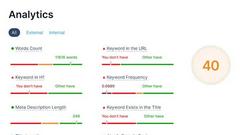
Disavow.ai identifies toxic backlinks harming your SEO and generates Google-ready disavow files for 70% less than Semrush.