TDEE Calculator
This clinically validated calculator uses the Mifflin-St Jeor equation to estimate your exact daily calorie needs for weight loss, gain, or.
Visit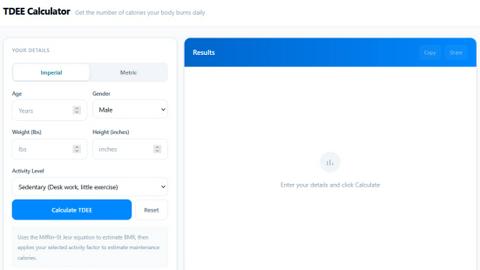
About TDEE Calculator
The TDEE Calculator, available at TDEE.io, is a precision tool designed to estimate your Total Daily Energy Expenditure (TDEE) with speed and accuracy. This calculator serves anyone looking to understand their daily calorie needs for weight management, performance optimization, or general health improvement. By inputting your age, sex, height, weight, and activity level, you receive an instant calculation of your maintenance calories, along with practical targets for fat loss, muscle gain, or weight maintenance. The core value proposition lies in its use of the scientifically validated Mifflin-St Jeor equation, which provides reliable estimates grounded in real physiology rather than guesswork. This tool is ideal for fitness enthusiasts, athletes, individuals beginning a weight loss journey, or anyone seeking a data-driven approach to nutrition planning. Beyond the baseline calorie estimate, the calculator offers actionable insights including calorie deficit and surplus recommendations, macro guidance, and activity-based adjustments. These features empower users to create a personalized nutrition plan that aligns with their specific lifestyle and goals. The tool is completely free, designed for clarity and practical use, and encourages users to treat its output as a starting point to be refined over time using real-world results. Whether your objective is losing weight, building muscle, or maintaining your current physique, this calculator provides a simple, credible foundation for informed decision-making about your daily calorie intake.
Features of TDEE Calculator
Mifflin-St Jeor Equation Integration
The calculator employs the Mifflin-St Jeor equation, which research published in the American Journal of Clinical Nutrition has identified as one of the most accurate methods for estimating resting metabolic rate in healthy adults. This formula calculates Basal Metabolic Rate (BMR) using separate equations for men and men: for men, BMR equals (10 times weight in kg) plus (6.25 times height in cm) minus (5 times age) plus 5; for women, BMR equals (10 times weight in kg) plus (6.25 times height in cm) minus (5 times age) minus 161. This scientific foundation ensures your TDEE estimate is reliable and physiologically sound.
Activity Level Customization
The calculator features five distinct activity levels to accurately adjust your calorie estimate based on your daily movement patterns. These range from Sedentary (1.2 factor for desk work with little exercise) through Light Exercise (1.375 for gentle activity 1-3 days weekly), Moderate Exercise (1.55 for planned workouts 3-5 days weekly), Heavy Exercise (1.725 for intense training 6-7 days weekly), to Athlete (1.9 for multiple daily sessions or very active work). This granularity allows the tool to generate a TDEE that reflects your unique lifestyle, preventing the common error of using a generic activity estimate.
Instant Calorie and Macro Guidance
Beyond calculating your maintenance calories, the tool provides immediate actionable targets for fat loss and muscle gain. It delivers calorie deficit recommendations (typically 250-500 calories below maintenance for weight loss) and surplus suggestions (200-350 calories above maintenance for muscle building). Additionally, the calculator offers macro guidance, helping you divide your daily calorie target into appropriate protein, carbohydrate, and fat goals that match your training style and lifestyle, making meal planning straightforward and effective.
Results Sharing and Copy Functionality
The calculator includes built-in features for sharing and copying your results, enhancing its practical utility. After calculating your TDEE, you can easily copy the results to your clipboard or share them via your device's sharing options. This functionality is particularly valuable for users who want to save their numbers for future reference, share them with a coach or nutritionist, or compare estimates across different points in their fitness journey. It streamlines the process of integrating your TDEE data into your broader nutrition tracking system.
Use Cases of TDEE Calculator
Structured Weight Loss Planning
Individuals aiming to lose weight can use the calculator to establish a precise calorie deficit. By determining their maintenance calories, users can then create a daily deficit of 250-500 calories, which typically supports sustainable fat loss of about 0.5-1 pound per week. The tool's activity level customization ensures that the deficit is realistic for someone's lifestyle, preventing overly aggressive cuts that could lead to fatigue, muscle loss, or metabolic slowdown. This data-driven approach replaces guesswork with a structured, measurable plan.
Muscle Gain and Performance Optimization
For those focused on building muscle or improving athletic performance, the calculator provides the foundation for a controlled calorie surplus. By identifying the exact maintenance number, users can add 200-350 calories daily to support muscle protein synthesis and recovery without excessive fat gain. The macro guidance further refines this approach by suggesting protein targets critical for muscle repair. Athletes and bodybuilders can use this tool to fine-tune their nutrition during bulking phases, ensuring they fuel performance gains efficiently.
Weight Maintenance and Lifestyle Management
Individuals who have reached their target weight and want to maintain it can use the calculator to identify their precise maintenance calorie level. This use case is critical for preventing the common cycle of weight regain after a diet. By inputting their current stats and activity level, users receive a clear daily target that helps stabilize their weight. The tool also allows for periodic recalculations as activity levels change due to seasonal shifts, new jobs, or altered training routines, ensuring the maintenance plan remains accurate over time.
Educational Tool for Nutrition Fundamentals
The calculator serves as an excellent educational resource for anyone learning about energy balance and metabolism. By adjusting inputs like age, weight, or activity level, users can see firsthand how these factors influence daily calorie needs. The inclusion of the Mifflin-St Jeor formula and activity factor explanations demystifies the science behind calorie estimation. This makes it a valuable tool for students, health coaches, or individuals new to fitness who want to understand the principles of energy expenditure before applying them to their own nutrition strategy.
Frequently Asked Questions
What does TDEE mean?
TDEE stands for Total Daily Energy Expenditure, which represents the total number of calories your body burns in a single day. This includes three main components: your Basal Metabolic Rate (BMR), which is the energy needed for basic life functions at rest; the thermic effect of food, which is the energy used to digest and process what you eat; and physical activity, which encompasses all movement from daily chores to intense exercise. Understanding your TDEE is essential because it sets the baseline for weight management: eating at your TDEE maintains weight, eating below creates a deficit for fat loss, and eating above creates a surplus for muscle gain.
How is TDEE different from BMR?
Basal Metabolic Rate (BMR) is the minimum amount of energy your body needs to function at complete rest, such as breathing, circulating blood, and maintaining body temperature. It accounts for roughly 60-75% of your total daily calorie burn. TDEE, on the other hand, is a more comprehensive measure that includes BMR plus all additional energy expenditure from food digestion and physical activity. While BMR is a static number based on your body composition, age, and sex, TDEE fluctuates based on your activity level. The TDEE Calculator first estimates your BMR using the Mifflin-St Jeor equation, then multiplies it by an activity factor to arrive at your total daily energy needs.
How accurate is this calculator?
The calculator uses the Mifflin-St Jeor equation, which research has validated as one of the most accurate formulas for estimating resting metabolic rate in healthy adults. However, it is important to treat the result as a starting estimate rather than an exact number. Individual metabolic rates can vary due to factors like genetics, muscle mass, hormone levels, and recent dieting history. For best results, use the calculated TDEE consistently for 2-3 weeks while monitoring your body weight. If your weight stays stable, the estimate is likely close. If you experience ongoing gain or loss, adjust by about 100-200 calories and reassess. This iterative approach helps personalize the estimate to your unique physiology.
Should I recalculate after losing weight?
Yes, you should recalculate your TDEE after significant weight loss, typically after losing 10-15 pounds or 5-10% of your body weight. As you lose weight, your body requires fewer calories to function because you have less mass to maintain. Continuing to eat at your original calorie target could slow your weight loss progress or cause a plateau. Similarly, recalculating after gaining muscle mass is important because muscle tissue is more metabolically active than fat, meaning your TDEE will increase. Regular recalculations ensure your nutrition plan remains aligned with your changing body composition and energy needs.
Top Alternatives to TDEE Calculator

Holly AI
Holly AI automates patient scheduling and communication, enhancing clinic efficiency and improving patient experiences 24/7.

Droidal Insurance Verification AI Agent
Droidal Insurance Verification AI Agent ensures real-time eligibility checks, reducing denials and accelerating payment before patient care begins.

MedicalRide.Org
MedicalRide.org simplifies booking private non-emergency medical transportation, ensuring tailored rides for your healthcare needs with transparency.


Mesostrength
Mesostrength is a hypertrophy training app that structures workouts into mesocycles and auto-adjusts volume based on your performance and recovery.

PhysioSlot
PhysioSlot streamlines appointment scheduling and payments for physical therapy clinics, reducing no-shows and.

DentistSlot
DentistSlot simplifies scheduling for dental clinics, enabling online bookings and reducing no-shows with automated.