
Opal vs Skene
Side-by-side comparison to help you choose the right product.

Opal empowers solopreneurs and neurodivergent thinkers to effortlessly manage their projects and notes in one intuitive platform.
Last updated: April 13, 2026

Skene automates onboarding, activation, and retention, transforming growth into a seamless, code-driven process.
Last updated: February 26, 2026
Visual Comparison
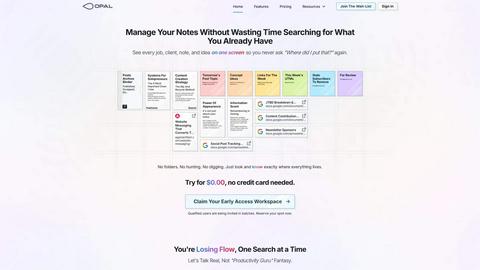
Opal
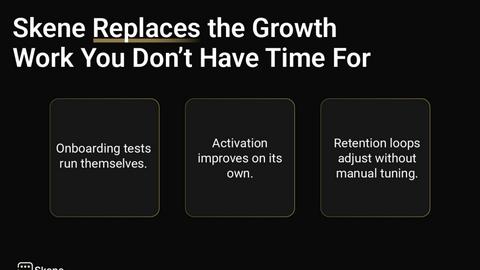
Skene
Feature Comparison
Opal
Visual Infinite Canvas
Opal provides a spacious digital workspace that allows users to visually organize their notes, tasks, and files. By presenting information in a spatial format, users can quickly grasp their entire workflow without unnecessary clicks or searches.
Markdown-Based Block Editor
The platform includes a rich markdown-based block editor, enabling users to create content with various media types. This feature is ideal for writing scripts, manuals, or articles, allowing for seamless integration of text, images, and links.
Real-Time Collaboration
Opal facilitates real-time collaboration, enabling multiple users to work on the same project simultaneously. This feature is essential for teams that require instant feedback and communication while managing tasks and documents.
AI Integration
With the Opal Recall skill, users can connect their own AI agents to the platform through an API. This integration enhances productivity by allowing users to retrieve information and insights quickly, making it easier to stay on top of tasks and projects.
Skene
Automated User Flow Optimization
Skene automatically analyzes user interactions within your product to identify friction points and activation drop-offs. It suggests and tests improved user flows, ensuring that users have a smoother onboarding experience and are more likely to engage with the product effectively.
Contextual Growth Insights
The platform derives signals directly from your codebase, enabling it to generate a contextual growth manifest. This integration allows for a more tailored approach to growth strategies, enhancing the relevance and effectiveness of onboarding processes.
Real-Time Analytics Dashboard
Skene provides a comprehensive analytics dashboard that displays real-time user progress, engagement metrics, and completion rates. This feature helps teams track the effectiveness of onboarding flows and identify bottlenecks, allowing for data-driven optimizations.
Effortless Setup and Integration
Setting up Skene takes less than 60 seconds. By simply connecting your GitHub or GitLab repository, the platform performs an analysis of your codebase to create PLG flows without requiring code changes or API alterations.
Use Cases
Opal
Project Management
Opal is perfect for project managers who need to track multiple tasks, clients, and deadlines. The visual organization helps keep everything in sight, ensuring that no detail is overlooked during project execution.
Content Creation
Writers and content creators can utilize Opal's markdown editor to draft articles, scripts, or manuals. The ability to organize thoughts and ideas visually aids in the creative process while streamlining content development.
Knowledge Management
For businesses that rely on standard operating procedures and documentation, Opal serves as a centralized knowledge management system. All essential information can be stored, linked, and accessed easily, reducing time spent searching for documents.
Client Management
Individuals managing client relationships can benefit from Opal's structure, allowing them to keep track of client notes, contracts, and communication history in one accessible space. This ensures that every detail is accounted for and easily retrievable.
Skene
Optimizing Onboarding Processes
Indie developers can leverage Skene to automatically enhance their onboarding processes. By identifying friction points and iterating on user flows, they can reduce time-to-value and improve user satisfaction, leading to higher conversion rates.
Streamlining Activation for Startups
Early-stage startups can utilize Skene as a comprehensive growth solution. It acts as a "growth team in a box," helping startups refine their activation strategies and ensuring that users transition smoothly from onboarding to active engagement.
Enhancing Retention Strategies
PLG companies can use Skene to maintain optimized retention loops. By continuously monitoring user interactions and making data-driven adjustments, businesses can reduce churn rates and increase customer lifetime value over time.
Automating Growth Efforts
Companies looking to offload manual growth tasks can adopt Skene as a self-sufficient growth engine. With its automated features, teams can focus on product development while Skene manages the intricacies of user engagement and retention optimization.
Overview
About Opal
Opal is an innovative productivity tool designed to transform the way individuals and teams manage their notes, documents, and important files. Unlike traditional productivity applications that often bury information in complex folder structures, Opal offers a visual, infinite canvas where users can arrange their content spatially on a digital desk. This approach allows users to see everything at a glance, ensuring that important information remains top of mind. Whether you are a freelancer, a project manager, or a business owner, Opal caters to anyone who relies on effective knowledge management. Its primary value proposition lies in eliminating the frustration of searching for lost information, thereby enhancing focus, improving productivity, and ultimately enabling users to do their best work without the chaos of disorganized tools.
About Skene
Skene is an innovative PLG (Product-Led Growth) iteration engine designed to empower indie developers and early-stage startups by automating the growth process without the need for dedicated growth teams. It focuses on the continuous optimization of essential user interactions such as onboarding, activation, and retention by leveraging insights derived from the customer code. By monitoring user actions, Skene identifies points of friction and activation drop-offs, allowing for real-time improvements to user flows. The platform autonomously creates, tests, and deploys enhanced configurations, ensuring that onboarding processes become more efficient, activation experiences are seamless, and retention strategies remain robust. With Skene, developers can streamline their growth efforts, freeing them to focus on product development rather than manual growth tactics. This self-learning growth engine is particularly advantageous for PLG companies that seek to optimize activation and enhance customer lifetime value without the burden of increasing headcount.
Frequently Asked Questions
Opal FAQ
What makes Opal different from traditional productivity tools?
Opal stands out by offering a visual workspace that allows users to spatially organize their information, unlike traditional tools that often rely on hierarchical folder structures.
Can I collaborate with my team on Opal?
Yes, Opal features real-time collaboration capabilities, allowing multiple users to work together seamlessly on projects and documents.
Is there an AI integration available in Opal?
Absolutely. Opal offers the Opal Recall skill, enabling users to connect their AI agents through an API for enhanced productivity and quick information retrieval.
How does Opal help with knowledge management?
Opal serves as a centralized hub for all your essential documents and notes, making it easy to access and link information, streamlining your knowledge management processes.
Skene FAQ
What is PLG software?
PLG (Product-Led Growth) software enables users to discover the value of a product independently, without needing intervention from sales or customer success teams. It automates the user journey to drive activation, feature adoption, and retention directly through the product experience.
How is Skene different from traditional customer experience software?
Unlike traditional tools that require manual maintenance and often rely on fragile UI overlays, Skene reads your codebase to automatically generate onboarding, analytics, and lifecycle automation. This eliminates the need for constant updates with every code deployment.
How long does it take to set up?
Setting up Skene is incredibly fast, taking less than 60 seconds. You simply need to connect your GitHub or GitLab repository (with read-only access), and Skene will analyze your codebase to create effective PLG flows without any additional coding requirements.
Is my code secure with Skene?
Yes, your code security is a top priority. Skene requires only read-only access to your repository, and all analyses occur in a secure, isolated environment, ensuring that your intellectual property remains protected.
Alternatives
Opal Alternatives
Opal is a spatial knowledge management tool designed specifically for solopreneurs, freelancers, and neurodivergent thinkers. By providing a visual, infinite canvas, Opal allows users to organize their notes, documents, and important files in a way that prioritizes visibility and accessibility. Its unique approach helps users retain a sense of control over their projects and enhances productivity. Many users seek alternatives to Opal for various reasons, including budget constraints, specific feature requirements, or compatibility with their preferred platforms. When looking for an alternative, consider factors such as ease of use, the ability to integrate with existing tools, and the flexibility of the software to accommodate your unique workflow. Ensuring that the alternative aligns with your organizational style and project management needs is crucial for maximizing productivity and efficiency.
Skene Alternatives
Skene is a cutting-edge Product-Led Growth (PLG) iteration engine that automates crucial aspects of user onboarding, activation, and retention. By leveraging insights derived from user interactions within the product, Skene enables developers and startups to optimize their growth processes without the need for extensive growth teams. Users often seek alternatives to Skene for various reasons, including cost considerations, specific feature requirements, or compatibility with different platforms. When searching for an alternative, it's essential to evaluate the features that align with your business needs, such as automated user flow optimization, real-time analytics, and ease of integration. Additionally, consider the scalability of the solution and how well it adapts to your unique growth strategies. A thorough understanding of your specific requirements will help guide you toward an effective alternative.