
Miget vs PUNKU.AI
Side-by-side comparison to help you choose the right product.

Miget
Deploy unlimited apps, databases, and workers on one fixed compute plan. No per-service billing—just pick your resources and build.

PUNKU.AI
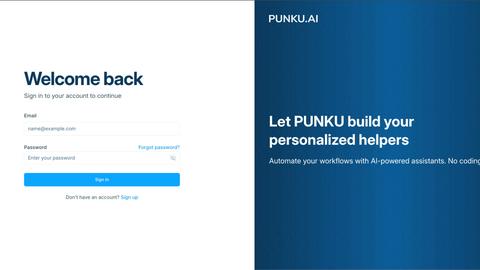
PUNKU.AI automates tasks effortlessly by transforming your plain English requests into smart AI solutions without cod...
Last updated: February 26, 2026
Visual Comparison
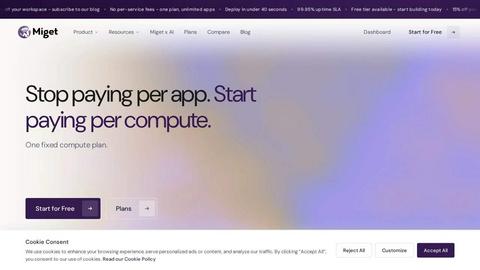
Miget
PUNKU.AI
Overview
About Miget
Miget – Stop paying per app. Start paying per compute.
Traditional PaaS platforms charge you for every app, database, and worker separately. Miget flips that model: pick a fixed compute plan, then deploy as many services as you want inside it.
- Unlimited apps, databases, and background workers per plan
- No per-service billing surprises
- Built on Kubernetes with full isolation between tenants
- Deploy from Git, GitHub, Registry with zero-config builds
- Managed PostgreSQL, Redis, and more
- Custom domains with automatic TLS
Whether you're running a single side project or a full production stack, you only pay for the compute you reserve—not the number of things you run on it.
About PUNKU.AI
PUNKU.AI is an innovative automation platform designed to streamline your workflow without the need for technical expertise. It empowers businesses and individuals to automate repetitive tasks effortlessly by simply describing their requirements in plain English. PUNKU.AI acts as a senior engineer, conducting interviews to gather detailed specifications and edge cases before constructing tailored automations. With a user-friendly visual node graph, users can gain clear insights into how their automations operate. The platform supports integration with over 3,000 APIs, including popular applications like Gmail, Slack, Notion, Zoom, and Google Workspace. PUNKU.AI not only builds automations but also continuously monitors performance, suggesting improvements based on key performance indicators (KPIs). Trusted by more than 200 businesses, PUNKU.AI reduces busywork, allowing teams to focus on high-value tasks while ensuring workflows run smoothly and efficiently.