
MARS8 Text to Speech AI Models vs Video to Text
Side-by-side comparison to help you choose the right product.

MARS8 Text to Speech AI Models
MARS8 delivers advanced text-to-speech models for reliable, multilingual voice solutions across diverse applications.
Last updated: February 25, 2026

Video to Text
Video to Text uses advanced AI to deliver fast, accurate transcriptions from any video or audio file in over 99 languages.
Last updated: April 13, 2026
Visual Comparison
MARS8 Text to Speech AI Models
Video to Text
Feature Comparison
MARS8 Text to Speech AI Models
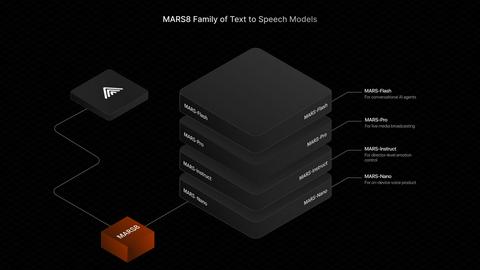
MARS-Flash
MARS-Flash provides the lowest time-to-first-byte (TTFB) for real-time applications, making it ideal for conversational AI agents and live voice interactions. This model excels in scenarios where immediate response times are critical, such as in contact centers or live sports commentary.
MARS-Pro
MARS-Pro combines speed and fidelity, making it the perfect choice for dubbing and audiobook production. This model is engineered to maintain high audio quality while also ensuring that the output is delivered quickly, catering to the demands of both content creators and audiences.
MARS-Instruct
With MARS-Instruct, users gain director-level control over emotional delivery in speech. This feature allows for the manipulation of tone, pitch, and pace to convey different emotions effectively, enhancing user engagement and satisfaction in applications like storytelling and training programs.
MARS-Nano
MARS-Nano is designed for high-quality on-device text-to-speech applications. This model ensures that even when operating without internet connectivity, users can still access premium voice outputs, making it perfect for mobile applications and devices with limited bandwidth.
Video to Text
High-Accuracy AI Transcription
Video to Text utilizes cutting-edge artificial intelligence to deliver exceptionally accurate transcriptions of both video and audio content. The system is trained on vast datasets to understand diverse accents, dialects, and speaking styles, ensuring that the final text output is reliable and minimizes the need for extensive manual corrections. This core feature provides the foundation for all other capabilities, making it a trustworthy solution for professional and personal use.
Support for 99 Languages with Auto-Detection
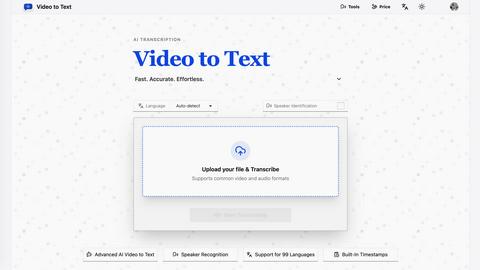
The platform boasts an unparalleled global reach with support for transcription in 99 languages, from widely spoken ones like English, Spanish, and Mandarin to regional dialects. Its intelligent auto-detection feature automatically identifies the primary language in your media file, streamlining the process. Furthermore, it offers multi-language recognition for recordings where speakers switch between languages, making it an indispensable tool for international teams and multicultural content.
Speaker Identification (Diarization)
This advanced feature automatically distinguishes between different speakers in a conversation, labeling each segment of the transcript with identifiers like "Speaker 1," "Speaker 2," etc. Speaker diarization transforms chaotic multi-person dialogues, such as meeting recordings, interviews, or panel discussions, into clearly organized, readable transcripts. This saves significant time in post-processing and enhances the clarity and usability of the transcribed content.
Built-In Timestamps & Flexible Export Options
Every transcription includes precise, built-in timestamps that align the text with specific moments in the original media. These timestamps are crucial for creating subtitles, editing video, or quickly navigating to key sections. Users can then export their finished transcript in multiple formats: TXT for plain text, SRT/VTT for subtitles, and CSV for data analysis, ensuring compatibility with any downstream workflow or software tool.
Use Cases
MARS8 Text to Speech AI Models
Real-Time Voice Agents
MARS8 is ideally suited for real-time voice agents, where instantaneous feedback is crucial. Whether in customer service or interactive gaming, MARS8 ensures that users receive prompt and accurate audio responses.
Live Sports Commentary
The MARS family excels in live sports commentary, providing audiences with real-time updates and analysis without delay. This capability is essential for engaging fans and enhancing their viewing experience during live events.
Audiobook Production
For audiobook creators, MARS-Pro offers a perfect balance of speed and quality, allowing for efficient production cycles without sacrificing the listening experience. This is particularly beneficial for publishers looking to meet growing consumer demand for audiobooks.
Conversational AI in Contact Centers
MARS-Flash enables conversational AI systems in contact centers to interact with customers effectively. The low-latency responses ensure that customer queries are addressed swiftly, leading to higher satisfaction rates and improved operational efficiency.
Video to Text
Content Creation and Subtitling
Video creators, YouTubers, and online educators use Video to Text to generate accurate subtitles (SRT/VTT files) for their videos, improving accessibility, viewer engagement, and SEO. The service quickly turns long-form content like tutorials, vlogs, and course materials into searchable text and compliant captions, streamlining the post-production process significantly.
Business and Meeting Documentation
Teams and remote workers leverage the tool to transcribe meetings, conference calls, and webinars. The speaker identification feature is particularly valuable here, creating organized, searchable minutes that can be shared with stakeholders, archived for reference, or mined for action items, ensuring no critical detail is lost.
Academic Research and Journalism
Researchers, journalists, and students utilize Video to Text to transcribe interviews, focus groups, and lectures. Converting spoken information into text enables efficient analysis, accurate quoting, and the creation of written summaries or articles. The high accuracy and language support make it reliable for sensitive or complex subject matter.
Language Learning and Accessibility
Language learners practice by transcribing audio lessons to check comprehension, while organizations use the service to make audio and video content accessible to deaf and hard-of-hearing individuals through accurate captions. It also aids in creating transcripts for podcasts, enhancing content reach and usability.
Overview
About MARS8 Text to Speech AI Models
MARS8 Text to Speech AI Models represent a significant advancement in generative speech technology, specifically tailored for real-time applications like sports commentary and news broadcasting. Designed for developers, MARS8 offers an API that allows for seamless integration into a variety of platforms. The MARS family comprises specialized models that cater to different use cases, ensuring that every application achieves optimal performance without compromising quality. With support for 99% of the world's languages, MARS8 stands out by delivering rock-solid reliability, even under high-stakes conditions where accuracy is paramount. Users can benefit from low-latency responses, high fidelity, and emotional expressiveness, making MARS8 ideal for diverse industries ranging from entertainment to customer service. Overall, MARS8 empowers developers to create innovative voice applications that resonate with audiences globally.
About Video to Text
Video to Text is a professional-grade, AI-powered transcription service engineered to convert video and audio files into clean, accurate, and exportable text. Designed for creators, teams, and individuals, it eliminates the complexity of building and maintaining a custom transcription pipeline. The platform delivers a seamless workflow from upload to export, leveraging advanced speech recognition to handle diverse content with high precision. Its core value proposition lies in offering fast, reliable, and speaker-aware transcription without requiring technical expertise. By supporting an extensive range of 99 languages and multiple export formats, Video to Text serves as a versatile tool for anyone needing to transform spoken content into actionable, searchable, and shareable text, from content creators and journalists to educators and business professionals.
Frequently Asked Questions
MARS8 Text to Speech AI Models FAQ
What makes MARS8 different from other TTS models?
MARS8 is specifically designed for real-time applications and offers a family of models tailored to various use cases. Its unique features, such as low latency and emotional control, set it apart from traditional TTS solutions.
How does MARS8 handle different languages?
MARS8 supports 99% of the world's languages, providing a multilingual backbone that allows businesses to reach diverse audiences while maintaining native pronunciation and intonation.
Can MARS8 be integrated into existing applications?
Yes, MARS8 is available as an API, making it easy for developers to integrate the TTS capabilities into their existing systems, whether for mobile apps, web services, or other platforms.
What industries can benefit from MARS8?
MARS8 can be utilized across various industries, including entertainment, customer service, education, and healthcare, wherever high-quality, real-time speech synthesis is required.
Video to Text FAQ
What is Video to Text?
Video to Text is a dedicated AI transcription tool that converts video and audio files into accurate text transcripts, subtitles, and other text-based formats. It is designed to be a fast, effortless, and professional solution for individuals and teams who need reliable speech-to-text conversion without managing complex software or services.
What file formats does Video to Text support?
The service supports a wide array of common video and audio formats to ensure broad compatibility. For video, it accepts MP4, MOV, MKV, WEBM, and M4V files. For audio, it supports MP3, WAV, M4A, FLAC, OGG, AAC, and OPUS files. This covers most file types generated by recording devices, editing software, and publishing platforms.
How does the speaker identification feature work?
The speaker identification feature, or diarization, uses AI to analyze vocal characteristics and speech patterns within an audio file. It automatically detects changes in speaker and labels each segment of the transcript accordingly (e.g., Speaker 1, Speaker 2). This happens automatically during the transcription process, organizing dialogues and multi-speaker recordings into a clear, readable format.
Is there a free trial available?
Yes, Video to Text offers new users 30 free minutes of transcription to test the service's accuracy, features, and workflow. This allows you to upload sample files and evaluate the output quality before committing to a paid plan, ensuring the tool meets your specific requirements.
Alternatives
MARS8 Text to Speech AI Models Alternatives
MARS8 Text to Speech AI Models is an advanced generative speech technology designed to provide reliable, multilingual voice solutions for real-time applications. As part of the AI Assistants category, MARS8 caters to developers by offering an API that facilitates seamless integration across diverse platforms, enhancing functionalities in sectors like sports commentary, news broadcasting, and customer service. Users often seek alternatives to MARS8 due to various factors such as pricing structures, specific feature sets, or compatibility with their existing platforms. When searching for a suitable alternative, it's essential to consider the quality of voice output, latency, emotional expressiveness, and the range of languages supported, as these aspects significantly impact the user experience and application performance.
Video to Text Alternatives
Video to Text is an AI-powered transcription service within the AI Assistants category, designed to convert video and audio files into clean, exportable text. It simplifies the process for creators, teams, and individuals who require fast, accurate speech-to-text conversion without the complexity of building their own system. Users often explore alternatives for various reasons, including budget constraints, the need for specific advanced features, or compatibility with different platforms and workflows. The search for a different tool is a normal part of finding the optimal solution for one's unique project requirements and operational scale. When evaluating other options, key considerations should include core accuracy, processing speed, supported file formats, and the flexibility of export options. It's also prudent to assess the overall user experience, data security measures, and the value provided relative to the cost to ensure the tool aligns with both immediate and long-term needs.