
Blueberry vs Fallom
Side-by-side comparison to help you choose the right product.

Blueberry
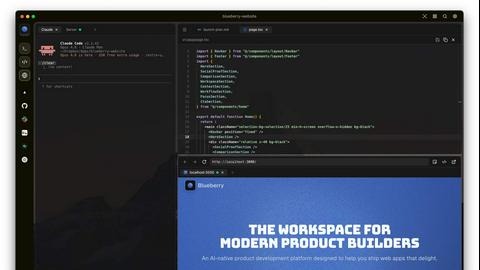
Blueberry is an all-in-one Mac app that unifies editing, terminal, and browsing for seamless web app development.
Last updated: February 25, 2026

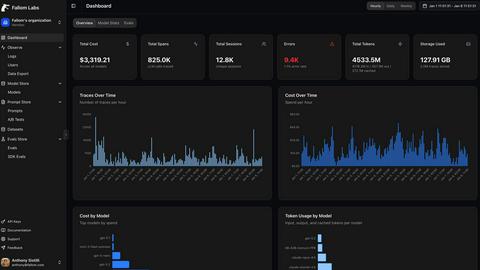
Fallom is an AI-native observability platform that provides real-time insights and analytics for LLMs and agents.
Last updated: February 26, 2026
Visual Comparison
Blueberry
Fallom
Feature Comparison
Blueberry
Integrated Workspace
Blueberry combines a terminal, code editor, and preview browser into one cohesive environment, minimizing the disruption caused by switching between different applications. This integration allows developers to maintain focus and efficiency, making the coding process smoother and more enjoyable.
Advanced AI Integration
With Blueberry's MCP server, you can connect various AI models directly within your workspace. This means your AI can see your entire project in real-time, providing contextual assistance that enhances coding and debugging, ultimately resulting in faster development cycles.
Multi-Device Preview
The built-in preview feature supports multiple device views, including desktop, tablet, and mobile. This provides developers with the ability to see exactly how their applications will appear to users across different platforms without leaving the Blueberry workspace.
Pinned Apps and Command Bar
Blueberry allows you to pin essential applications like GitHub, Figma, and Linear directly in your workspace. Additionally, the command bar enables quick access to files, project navigation, and command execution, ensuring that developers can work efficiently without losing their flow.
Fallom
Real-Time Observability
Fallom offers real-time observability for AI agents, allowing users to track every tool call in detail. This feature enables comprehensive analysis of timing, latency, and costs associated with LLM calls, fostering a deeper understanding of operational performance.
Cost Attribution
With Fallom, organizations can achieve full transparency over their AI-related expenditures. The platform allows users to track costs per model, user, and team, facilitating accurate budgeting and chargeback processes essential for financial accountability.
Compliance Ready
Fallom is engineered to meet stringent regulatory requirements, offering full audit trails that support compliance with frameworks such as the EU AI Act, SOC 2, and GDPR. Features include immutable logs, input/output tracking, model versioning, and consent management.
Session Tracking
This feature groups traces by session, user, or customer, providing complete context for every LLM interaction. It allows organizations to analyze user behavior and interactions, enhancing insights into application performance and user engagement.
Use Cases
Blueberry
Streamlined Development Workflows
Developers can use Blueberry to create a personalized workspace that includes all necessary tools and apps. By saving specific setups for each project, they can quickly switch contexts and maintain productivity without the hassle of reopening and rearranging windows.
Enhanced Collaborative Projects
In team environments, Blueberry allows multiple users to work on the same project with shared access to the workspace. This fosters collaboration and real-time feedback, making it easier to manage group projects and track changes effectively.
Efficient Debugging and Testing
With the integrated AI models, debugging becomes a more manageable task. Developers can query their AI about code functionality or issues while observing real-time terminal output, significantly reducing the time spent on troubleshooting.
Rapid Prototyping
For product builders looking to test new ideas quickly, Blueberry's live preview and integrated tools facilitate rapid prototyping. The ability to see changes in real time helps teams iterate faster and validate concepts before full-scale development.
Fallom
Debugging Multi-Step Agents
Fallom is indispensable for teams developing multi-step agents, as it provides timing waterfalls that help identify latency issues within workflows. This allows engineers to optimize performance and improve user experience through better debugging.
Regulatory Compliance Management
Organizations operating in regulated industries can leverage Fallom to maintain compliance effortlessly. With comprehensive audit trails and user consent tracking, businesses can demonstrate adherence to necessary legal standards while managing LLM operations.
Cost Management in AI Deployments
With the cost attribution feature, companies can meticulously track their AI spending on a granular level. This empowers teams to identify cost-saving opportunities and allocate resources more effectively across various models and user groups.
Performance Monitoring and Evaluation
Fallom offers real-time dashboards for monitoring LLM usage, enabling teams to spot anomalies and performance issues before they escalate. This proactive approach helps maintain the reliability of AI systems and enhances overall operational efficiency.
Overview
About Blueberry
Blueberry is an innovative macOS application designed to integrate your editor, terminal, and browser into a single, focused workspace, streamlining the product development process. It serves as an AI-native platform that enables modern product builders to create web applications seamlessly and efficiently. By connecting with advanced AI models like Claude, Gemini, and Codex through its built-in MCP server, Blueberry provides your AI with full visibility of your files, terminal outputs, and live previews. This eliminates the need for tedious copy-pasting of context, allowing developers to focus on coding and creativity rather than managing multiple tools. Whether you are a solo developer or part of a larger team, Blueberry is crafted to enhance productivity, foster collaboration, and simplify workflows, making it an essential tool for anyone involved in web app development.
About Fallom
Fallom is a cutting-edge, AI-native observability platform designed specifically for managing large language model (LLM) and agent workloads. It empowers organizations to monitor and analyze every LLM call made in production environments through comprehensive end-to-end tracing. Key aspects captured include prompts, outputs, tool calls, tokens utilized, latency, and the cost associated with each call. Fallom is tailored for enterprises needing robust compliance measures, providing session, user, and customer-level context as well as detailed timing waterfalls for multi-step agents. Its enterprise-ready features include audit trails, logging, model versioning, and user consent tracking, ensuring adherence to regulatory standards. With a streamlined OpenTelemetry-native SDK, teams can easily instrument applications in just minutes, enabling real-time monitoring, rapid debugging, and precise cost attribution across various models, users, and teams.
Frequently Asked Questions
Blueberry FAQ
What operating system is Blueberry compatible with?
Blueberry is currently designed exclusively for macOS, ensuring optimal performance and integration within Apple's ecosystem.
Is Blueberry really free during the beta phase?
Yes, Blueberry is completely free during its beta phase, allowing users to experience its features without any financial commitment.
How does Blueberry handle AI model integration?
Blueberry features a built-in MCP server that allows users to connect to various AI models like Claude, Codex, and Gemini, providing them with contextual insight into the entire project.
Can I use Blueberry for collaborative projects?
Absolutely! Blueberry supports collaborative workflows by allowing multiple users to share the same workspace, making it easier to work together on projects in real time.
Fallom FAQ
What is Fallom?
Fallom is an AI-native observability platform that provides comprehensive monitoring and analysis of LLM and agent workloads, enabling organizations to optimize performance and ensure compliance.
How does Fallom ensure compliance?
Fallom includes features like audit trails, input/output logging, model versioning, and user consent tracking, all designed to help organizations meet regulatory standards such as GDPR and SOC 2.
Can Fallom be integrated easily?
Yes, Fallom utilizes a single OpenTelemetry-native SDK that allows teams to instrument their applications quickly and monitor usage with minimal overhead, typically in under five minutes.
What kind of analytics does Fallom provide?
Fallom delivers detailed analytics on LLM calls, including timing, cost attribution, performance metrics, and session tracking, which collectively allow organizations to gain deeper insights into their AI deployments.
Alternatives
Blueberry Alternatives
Blueberry is an innovative macOS application that falls under the category of development tools, specifically designed to unify the coding experience by integrating an editor, terminal, and browser into a single, focused workspace. This all-in-one platform is particularly attractive to web app developers, streamlining the development process through advanced AI integrations and a seamless user interface. Users often seek alternatives to Blueberry for various reasons, such as pricing concerns, specific feature requirements, or compatibility with different operating systems. When looking for an alternative, it's essential to consider factors like ease of use, integration capabilities with existing tools, and the overall effectiveness in enhancing productivity. Evaluating these aspects can help developers find a solution that best meets their unique workflow and project needs.
Fallom Alternatives
Fallom is an innovative, AI-native observability platform designed to provide real-time insights and analytics for large language models (LLMs) and agents. As organizations increasingly adopt AI technologies, they often seek solutions that allow them to effectively monitor and manage their LLM workloads. Users typically explore alternatives to Fallom for various reasons, including pricing, specific feature requirements, or the need for different platform integrations that better align with their operational workflows. When choosing an alternative, it's essential to consider factors such as the comprehensiveness of observability features, compliance capabilities, cost transparency, and the ease of integration with existing systems. Additionally, evaluating the scalability and support offered by the platform can help ensure it meets both current and future organizational needs.