
Renderly vs Wan 2.7
Side-by-side comparison to help you choose the right product.

Renderly
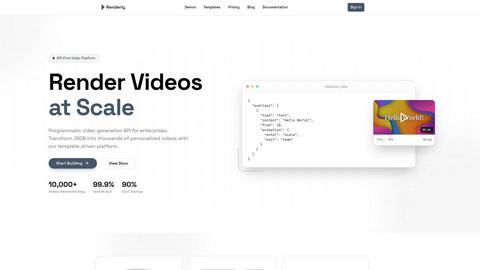
Renderly automates video production at scale, generating thousands of personalized videos quickly and cost-effectively.
Last updated: February 25, 2026

Wan 2.7
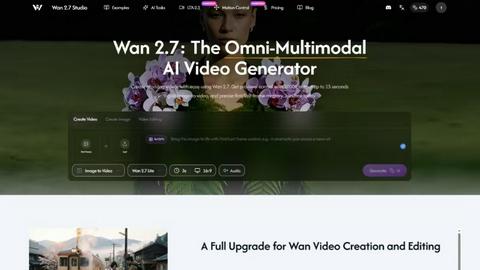
Wan 2.7 Studio is the all-in-one AI video generator offering pro-level control, 9-grid composition, and instruction-based editing for stunning.
Last updated: April 4, 2026
Visual Comparison
Renderly
Wan 2.7
Feature Comparison
Renderly
API-First Architecture
Renderly boasts a RESTful API designed specifically for high-volume video generation, allowing developers to seamlessly integrate video capabilities into their applications. This architecture ensures that users can programmatically create videos with ease, making it suitable for both small projects and large-scale enterprises.
Template Management
With a centralized template library, Renderly provides users the ability to manage video templates effectively. This feature supports version control and JSON configuration, enabling dynamic content replacement based on user data, which is essential for personalized video production.
Scalable Infrastructure
Renderly operates on a cloud-native platform that features auto-scaling capabilities. This means that whether you need to render one video or 100,000, Renderly can handle the load without any performance dips, ensuring reliability during peak times.
Credit-Based Billing
Renderly offers a transparent, pay-per-render pricing model that includes volume discounts for enterprise customers. This billing approach allows users to only pay for what they render, making it a cost-effective solution for businesses of all sizes.
Wan 2.7
Structured Compositional Control
Wan 2.7 provides granular control over video composition through two powerful features. The first is precise first-frame and last-frame generation, allowing creators to dictate exactly how a video clip begins and concludes. The second is the innovative 9-grid (3x3) image-to-video capability, which enables users to feed a detailed scene structure into the model. This richer input grants the AI stronger compositional understanding, leading to videos that more accurately reflect the intended scene layout and narrative flow.
Multi-Reference Consistency (Subject + Voice)
This feature ensures remarkable consistency across generated videos. Users can lock in specific subject details—such as facial features, clothing, and hairstyles—by providing reference images, ensuring characters remain coherent in every shot. Furthermore, the platform supports voice reference, allowing for synchronized audio that matches the character's lip movements and maintains consistent vocal characteristics. This is essential for creating serialized content or advertisements with a recurring brand spokesperson.
Instruction-Based Video Editing & Recreation
Wan 2.7 seamlessly blends generation with post-production. Instead of starting from scratch, users can edit existing AI-generated videos through simple natural language instructions. This "recreation" capability allows for iterative refinement—such as changing a character's outfit, modifying the background, or altering the lighting—while intelligently preserving the original clip's core motion structure and temporal dynamics.
Five Core Quality Upgrades
The Wan 2.7 model is not defined by a single feature but by a holistic enhancement across five fundamental areas. It delivers sharper visual output with improved detail rendering, more natural and dynamic motion physics, stronger stylization control for achieving specific artistic looks, better audio synchronization for a cohesive experience, and significantly improved subject continuity for longer or multi-shot sequences. This all-around upgrade ensures professional-grade results.
Use Cases
Renderly
Personalized Marketing Campaigns
Companies can utilize Renderly to create personalized marketing videos for their customers. By inputting customer data into the platform, businesses can automatically generate tailored video content that speaks directly to individual preferences, increasing engagement and conversion rates.
Social Media Content Generation
Social media managers can leverage Renderly to produce bulk video content for various platforms. By automating the rendering of multiple videos at once, teams can maintain a consistent posting schedule without the need for extensive manual labor.
Dynamic Data Visualizations
Data-driven organizations can benefit from Renderly's ability to create motion graphics that visualize complex datasets. By transforming JSON data into engaging videos, companies can present their findings in a more digestible and visually appealing format.
E-Learning and Training Videos
Educational institutions and corporations can use Renderly to automate the production of training videos. By utilizing templates and pre-defined content, they can quickly generate instructional materials that are both informative and visually engaging, enhancing the learning experience.
Wan 2.7
Social Media Content Creation
Creators can rapidly produce engaging, high-quality short-form videos for platforms like TikTok, Instagram Reels, and YouTube Shorts. The ability to generate content from text ideas or image collages (using the 9-grid feature), combined with consistent character generation, allows for the efficient production of serialized content, educational clips, and branded promotional material that stands out in crowded feeds.
Prototyping for Film and Animation
Filmmakers, storyboard artists, and animators can use Wan 2.7 to visualize scenes quickly. By inputting keyframes or descriptive text, they can generate motion concepts, test different visual styles, and prototype complex shots before committing to expensive production pipelines. The first/last frame control is particularly useful for planning scene transitions and narrative beats.
Personalized Marketing and Advertising
Marketing teams can create customized video ads featuring a consistent brand ambassador or product spokesperson without the need for repeated live-action shoots. By using subject reference, a single model can be placed in various scenarios and settings, delivering personalized messages at scale while maintaining perfect brand identity and voice consistency across all campaigns.
Educational and Explainer Video Production
Educators and corporate trainers can transform static diagrams, infographics, or text-based lesson plans into dynamic explainer videos. The 9-grid feature can animate complex processes step-by-step, while instruction-based editing allows for easy updates and corrections. This makes complex information more digestible and engaging for learners.
Overview
About Renderly
Renderly is an innovative video infrastructure platform designed to revolutionize the way developers and creators produce video content. By automating video production at scale, Renderly eliminates the need for tedious manual rendering processes. This API-first platform is particularly beneficial for enterprises looking to generate personalized videos, bulk social media content, and data-driven motion graphics quickly and efficiently. With its robust template-driven architecture, users can transform JSON data into thousands of customized videos, allowing for high-volume production without compromising on quality. Renderly’s commitment to performance is evident in its impressive uptime SLA of 99.9% and the ability to render over 10,000 videos daily. By integrating Renderly into your workflow, you can reduce costs by up to 90% compared to traditional video rendering solutions, making it a go-to choice for those aiming to scale video content creation.
About Wan 2.7
Wan 2.7 is an omni-multimodal AI video generation platform, representing a comprehensive leap forward in generative video technology. It is engineered to transform text prompts and static images into high-quality, dynamic video clips up to 15 seconds in length with professional 1080P output. The platform is built upon the advanced Wan 2.7 model, offering an intuitive interface that simplifies complex video creation for a broad audience, from individual content creators and marketers to developers and professional video producers. Its core value proposition lies in delivering unprecedented creative control and consistency, moving beyond basic generation to offer a full suite of editing and refinement tools within a single, streamlined workflow. Wan 2.7 is designed for users who demand professional-grade visual quality, precise compositional control, and persistent character identity in their AI-generated video content, making it a powerful tool for storytelling, advertising, social media, and prototyping.
Frequently Asked Questions
Renderly FAQ
What types of videos can I create with Renderly?
Renderly allows users to create a wide range of video types, including personalized marketing videos, social media content, motion graphics, and training videos, all tailored to specific audience needs.
How does Renderly ensure high-quality video rendering?
Renderly employs advanced rendering technology and a robust cloud-native infrastructure to guarantee high-quality video outputs. The platform is designed to handle high-volume rendering efficiently while maintaining visual fidelity.
Is Renderly easy to integrate with existing systems?
Yes, Renderly's RESTful API is designed for seamless integration with existing systems and applications. Comprehensive documentation, webhooks, and SDKs are provided to facilitate a smooth onboarding process for developers.
What kind of support does Renderly offer for its users?
Renderly offers extensive support through detailed documentation, a dedicated help center, and responsive customer service. Users can access resources to help them maximize the platform's capabilities and address any technical issues.
Wan 2.7 FAQ
Is Wan 2.7 free to use?
Yes, Wan 2.7 offers a free tier to get users started. New users can claim 15 free credits to experience the platform's core capabilities, including video generation and key features like structured control. This allows for hands-on testing of the AI's quality and workflow before considering any paid plans for higher-volume needs.
How does the 3x3 grid Image-to-Video feature work?
The 3x3 grid, or 9-grid, feature allows you to upload or create a composite image divided into nine panels. Each panel guides the AI's understanding of the scene's spatial composition and narrative sequence over time. By arranging elements across this grid, you provide a detailed structural blueprint, resulting in a video with stronger scene composition, better object placement, and more controlled motion paths than a single image prompt alone.
Can Wan 2.7 maintain character consistency?
Absolutely. Through its advanced Multi-Reference system, Wan 2.7 excels at maintaining persistent character identity. By uploading one or more reference images of a subject (a person, cartoon character, or object), the AI locks in key features. This ensures that the same character, with consistent facial details, clothing, and style, appears accurately across multiple generated video clips and scenes.
What is Instruction-Based Video Recreation?
Instruction-Based Video Recreation is an advanced editing workflow. After generating an initial video, you can submit it back to the AI alongside a natural language instruction (e.g., "change the man's jacket to blue" or "add snowfall in the background"). The model then recreates the video, incorporating your requested edits while meticulously preserving the original's motion dynamics and temporal flow, enabling rapid iteration and refinement.
Alternatives
Renderly Alternatives
Renderly is an innovative video infrastructure platform that automates video production at scale, making it easier for developers and creators to produce high-quality video content efficiently. As an API-first solution, it caters to enterprises looking to streamline their video generation processes, particularly for personalized and bulk content. Users often seek alternatives to Renderly for various reasons, including pricing considerations, specific feature requirements, or the need for compatibility with existing platforms and workflows. When evaluating alternatives, it's essential to consider factors such as the ease of integration, scalability, template management capabilities, and overall value for money to ensure a solution meets unique production needs.
Wan 2.7 Alternatives
Wan 2.7 is a dedicated AI video generation platform that simplifies creating videos from text or images. It represents a significant tool within the generative AI video category, designed for creators and developers seeking a streamlined workflow for high-quality content. Users often explore alternatives for various reasons. These can include budget constraints, as pricing models differ widely, or a need for specific features not offered. Others may require integration with different platforms or seek a user experience that better aligns with their technical skill level. When evaluating other options, consider the core capabilities you need, such as output quality, generation speed, and the intuitiveness of the interface. It's also wise to assess the scalability of the platform, its API availability for developers, and the transparency of its pricing structure to ensure a long-term fit for your video creation goals.