Project20x vs RocketShare

Side-by-side comparison to help you choose the right product.

Project20x is an AI governance platform that ensures policy compliance and proof.

Last updated: March 4, 2026

RocketShare encrypts your files on device for secure, private sharing with zero-knowledge links.

Last updated: March 3, 2026

Visual Comparison

Project20x
Project20x screenshot

RocketShare

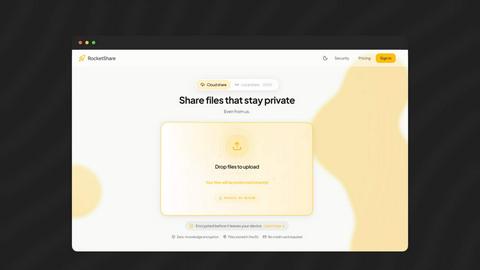
RocketShare screenshot

Feature Comparison

Project20x

The Governance Layer

This foundational layer applies a rigorous, 10-step AI-driven workflow to the policy creation process. It analyzes draft legislative language for clarity, identifies potential conflicts with existing regulations, and models projected outcomes and impacts. This allows legislators and policymakers to prove a policy's operational and fiscal feasibility before a vote is ever cast, transforming policy-making from a theoretical exercise into an evidence-based practice and significantly reducing unintended consequences.

The Management Layer ("Rules as Code")

Once a policy is enacted, this layer automatically translates the legal text into executable machine-readable code. This "Rules as Code" approach converts complex agency programs and procedures into automated digital workflows. This eliminates manual bottlenecks, reduces processing errors, and enables real-time tracking of program performance, compliance, and resource allocation, allowing managers to optimize operations continuously.

The Citizen Interface Layer

This layer provides the public with 24/7 access to government through AI agents trained directly on the codified policy database. Citizens can interact with these agents to easily understand services, check eligibility for benefits, submit applications, and track the status of government promises and projects they voted for. This creates a transparent, always-available, and user-friendly gateway to public services.

Foundational Integrity Framework

Project20x is built with enterprise-grade, zero-trust security architectures to protect sensitive government data. It incorporates mandatory human-in-the-loop oversight for all high-stakes decisions, ensuring AI augments rather than replaces human judgment. Furthermore, the platform employs continuous algorithmic bias testing and auditing to ensure fairness and equity are maintained across all automated processes and citizen interactions.

RocketShare

Zero-Knowledge, Client-Side Encryption

This is the cornerstone of RocketShare's security. Every file is encrypted locally on your computer or device using a unique key before it ever leaves for the cloud. This encryption key is kept exclusively on your side, embedded within the shareable link (in the URL fragment), and is never transmitted to or stored on RocketShare's servers. Consequently, the platform only ever handles encrypted data blobs, making it technically impossible for anyone at RocketShare or a third-party attacker with server access to decrypt and view your files.

RocketShare simplifies secure sharing by generating a unique link for your uploaded file. The critical decryption key is contained within a fragment of this URL, which is not sent to the server during standard web requests. When you share this link, the recipient's browser uses the fragment to decrypt the file client-side. The backend only stores the encrypted file and associated metadata (like filename and expiry), ensuring the content remains private throughout the entire transfer and storage process.

EU-Based Data Storage & Sovereignty

All encrypted user data is stored on servers located within the European Union. This provides users with strong data protection guarantees under regulations like the GDPR. Choosing EU-based storage ensures that data is subject to some of the world's strictest privacy laws, offering peace of mind regarding data sovereignty, jurisdictional control, and compliance for both European and international clients concerned with regional data handling standards.

Self-Destructing Files & Expiry Controls

Users maintain full control over the lifespan of their shared files. RocketShare allows you to set automatic expiration dates on any shared link. Once the set time period elapses, the link becomes invalid and access to the file is permanently revoked. This feature is crucial for sharing time-sensitive documents, draft materials, or any content where indefinite access poses a security or compliance risk, ensuring data does not persist unnecessarily.

Use Cases

Project20x

Legislative Impact Analysis

A state legislature uses the Governance Layer to draft a new environmental bill. The AI analyzes the text, flags a conflict with an existing federal grant requirement, and models the bill's projected cost and carbon reduction impact over ten years, providing lawmakers with a clear, data-backed report before the floor debate begins.

Social Benefits Automation

A city's social services agency implements the Management Layer to codify its housing assistance eligibility rules. The resulting automated workflow instantly processes applications, verifies documentation against other government databases, and calculates benefit levels, reducing approval times from weeks to days and freeing caseworkers for complex client support.

24/7 Citizen Inquiry Portal

A federal department deploys the Citizen Interface Layer, allowing veterans to ask a secure AI agent questions about their GI Bill benefits at any time. The agent, trained on the exact codified rules, provides instant, accurate answers on eligibility, payment schedules, and approved education programs, drastically reducing call center wait times.

Grant Compliance and Tracking

A federal grant-making agency uses Project20x to codify the reporting and compliance requirements for its funding programs. Recipients submit data through automated workflows, and the platform provides real-time dashboards to agency managers, showing which projects are on track, flagging potential issues, and ensuring public funds are used as legislated.

RocketShare

Law firms and legal professionals regularly handle highly confidential case files, contracts, and client communications. RocketShare's zero-knowledge encryption ensures that attorney-client privilege and sensitive case details are maintained, as not even the service provider can access the content. Secure, expiring links allow for the safe transmission of drafts and final documents to clients and co-counsel, with automatic deletion providing an audit trail and reducing data retention liability.

Healthcare Data & Patient Privacy

Healthcare providers, clinics, and researchers need to share medical records, lab results, and imaging files in compliance with strict regulations like HIPAA. RocketShare facilitates this by ensuring Protected Health Information (PHI) is encrypted before leaving the medical institution's network. The EU-based storage adds an extra layer of jurisdictional security, making it a robust tool for secure patient referrals and collaborative research while upholding patient confidentiality.

Creative Asset & IP Protection

Photographers, videographers, game studios, and marketing agencies constantly share high-value intellectual property such as raw footage, design mockups, unreleased game builds, and campaign assets. RocketShare protects this IP from interception or unauthorized access by competitors or third parties. Creators can share previews with clients or team members globally, knowing their work remains encrypted and access can be limited with expiry dates.

Confidential Financial Audits & Reporting

Accountants, auditors, and financial consultants manage sensitive financial statements, tax records, and audit reports. Sharing these documents via email or standard cloud storage carries significant risk. RocketShare provides a secure conduit for exchanging confidential financial data with clients and regulatory bodies. The zero-knowledge model ensures that financial secrets remain private, supporting compliance with data protection regulations in the financial sector.

Overview

About Project20x

Project20x is a transformative, AI-native platform designed to fundamentally rebuild government operations for the 21st century. It addresses the core inefficiencies of modern governance by converting sprawling, text-based regulations and policies into executable, transparent, and measurable digital workflows. The platform serves a critical triad of users: legislators and policymakers, government agency managers, and the citizens they serve. Its core value proposition is creating a closed-loop system of accountability, where every policy, from conception to citizen delivery, is traceable, data-driven, and proven for feasibility before implementation. By applying AI to analyze legislation, automate "Rules as Code," and provide intelligent public interfaces, Project20x moves government from a slow, opaque, and manual bureaucracy to a dynamic, efficient, and transparent service provider. It ensures that public dollars and programs deliver their intended outcomes with unprecedented clarity and efficiency.

About RocketShare

RocketShare is a secure file-sharing platform engineered for professionals and organizations that prioritize data privacy above all else. It operates on a foundational zero-knowledge architecture, meaning files are encrypted directly on the user's device before any data is transmitted. The encryption keys are never sent to or stored on RocketShare's servers, ensuring that the company itself cannot access the content of the files. This model provides enterprise-grade security within a simple, self-serve interface designed for daily use. The platform is ideal for industries handling sensitive information, such as legal, healthcare, finance, and creative sectors. Its core value proposition is delivering uncompromising privacy—"your files stay private, even from us"—combined with the convenience of easy link sharing, automatic expiry controls, and secure storage within the European Union. RocketShare empowers users to share confidential documents, media, and data with the absolute confidence that their intellectual property and client information remain protected end-to-end.

Frequently Asked Questions

Project20x FAQ

How does Project20x ensure the AI does not make biased or incorrect decisions?

Project20x employs a multi-layered approach to integrity. First, all high-stakes decisions, such as benefit denials or regulatory penalties, require mandatory human-in-the-loop review and approval. Second, the platform conducts continuous bias testing on its algorithms and the outcomes they produce. Finally, because policies are translated into explicit, auditable code ("Rules as Code"), every automated decision can be traced back to the specific rule that triggered it, ensuring transparency and accountability.

What is "Rules as Code" and how is it different from a standard database?

"Rules as Code" is not merely storing policy text in a database. It is the process of formally representing legislative and regulatory rules in a structured, machine-executable language. This allows computers to automatically apply logic, make determinations, and execute workflows based on the law itself. A standard database can only retrieve information; Rules as Code enables the automation of the entire process governed by that information.

Is citizen data safe on the Project20x platform?

Absolutely. Security is a foundational principle. Project20x is built on a zero-trust security model, which assumes no user or system is trusted by default, whether inside or outside the network. All access requests are strictly verified, data is encrypted, and activity is continuously monitored. This architecture is designed to meet and exceed the stringent security requirements of government IT systems.

Can Project20x integrate with existing government IT systems?

Yes, the platform is designed for interoperability. It can integrate with legacy systems through secure APIs and data connectors, allowing agencies to modernize their workflows incrementally without requiring a complete, risky "rip-and-replace" of their current technology investments. The platform acts as an intelligent orchestration layer that enhances existing infrastructure.

RocketShare FAQ

How does RocketShare's zero-knowledge model work?

RocketShare's zero-knowledge model ensures total privacy by handling encryption exclusively on your device. When you upload a file, the RocketShare application on your computer creates a strong encryption key and uses it to scramble the file before any data is sent over the internet. This encrypted data is then stored on RocketShare's servers. The decryption key is never sent to these servers; instead, it is embedded within the shareable link you generate. Only someone with the full link (containing the key fragment) can decrypt and access the original file, guaranteeing that RocketShare cannot view your content.

Where are my files physically stored?

All user-uploaded files (in their encrypted state) are stored on secure servers located within the European Union. This commitment to EU-based storage ensures that data residency complies with the General Data Protection Regulation (GDPR), offering users strong legal privacy protections and clear jurisdictional guidelines regarding how their data is housed and managed.

When you set an expiry date for a shared link, RocketShare's system automatically invalidates that link at the specified time. Once expired, the link will no longer provide access to download the encrypted file from the servers. Depending on your account settings and the service's data retention policy, the encrypted file data itself may also be permanently deleted from the servers after expiry, ensuring the information is not retained indefinitely.

Is a credit card required to start using RocketShare?

No, you can start using RocketShare's core secure sharing services without providing a credit card. The platform offers a free tier or trial that allows users to experience the zero-knowledge encryption and file-sharing functionality, making it easy for individuals and teams to evaluate the service's security and fit for their needs before committing to a paid plan.

Alternatives

Project20x Alternatives

Project20x is a comprehensive AI governance platform in the productivity and management category. It is designed to transform government operations by converting complex policies into transparent, executable digital workflows, ensuring accountability and proof of feasibility from legislation to citizen service delivery. Users may explore alternatives for several reasons, including budget constraints, specific feature requirements not covered by the platform, or a need for a solution tailored to a different scale or sector of governance. The search often stems from a need to balance advanced AI capabilities with practical implementation costs and technical integration needs. When evaluating alternatives, key considerations should include the platform's ability to translate policy into code, its security and compliance frameworks, the depth of its AI-driven analysis and modeling tools, and the transparency it offers to both administrators and citizens. The ideal solution should demonstrably improve efficiency while maintaining rigorous oversight and auditability.

RocketShare Alternatives

RocketShare is a secure file-sharing service in the productivity and management category, distinguished by its zero-knowledge architecture. This model ensures files are encrypted on the user's device before upload, with decryption keys never stored on the service's servers, offering a high degree of privacy for sensitive data. Users may explore alternatives for various reasons, such as differing budget constraints, the need for specific collaboration features like real-time editing or team workspaces, or requirements for integration with other business platforms. Some may also seek solutions with different storage capacities or platform compatibility beyond web and mobile apps. When evaluating other services, key considerations should include the underlying security model, especially whether encryption is client-side or server-side. It's also prudent to assess the vendor's data retention policies, link expiration controls, ease of use, and the transparency of their privacy practices to ensure the alternative meets both functional and security requirements.

Continue exploring