
HookMesh vs Playwriter
Side-by-side comparison to help you choose the right product.

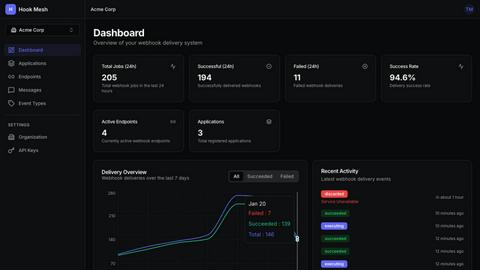
HookMesh ensures reliable webhook delivery with automatic retries and a self-service portal for seamless integration.
Last updated: February 25, 2026

Let claude code, openclaw, codex and any agent control your Chrome browser via CLI or MCP.
Visual Comparison
HookMesh
Playwriter

Overview
About HookMesh
HookMesh is an advanced webhook delivery solution designed to alleviate the complexities of managing webhooks in modern applications. It provides a comprehensive infrastructure that automates the critical aspects of webhook delivery, allowing developers to focus on their core product features instead of wrestling with retry logic, error handling, and debugging delivery issues. Built for software teams across various industries, HookMesh offers a user-friendly, self-service portal where customers can easily manage their webhook endpoints, monitor delivery logs, and replay failed webhooks with just a click. The platform ensures reliable, battle-tested delivery mechanisms, including automatic retries, circuit breakers, and guaranteed delivery with idempotency keys. With a generous free tier allowing 5,000 webhooks per month, HookMesh enables teams to integrate and test webhook capabilities rapidly, making it an invaluable tool for any SaaS provider looking to enhance their application's reliability and performance.
About Playwriter
AI agents cannot browse the web properly. They either have no browser access, or they get a fresh Chrome with no logins, no extensions, and instant bot detection. Playwriter gives them your actual browser session instead. One Chrome extension, full automation API, everything you are already logged into. Includes accessibility snapshots (5-20KB instead of 100KB+ screenshots), a debugger with breakpoints, live code editing, network interception, and video recording. Works with any MCP client: Cursor, Claude, VS Code, and more. Open source, MIT licensed.