
Kling 2.6 vs Renderly
Side-by-side comparison to help you choose the right product.

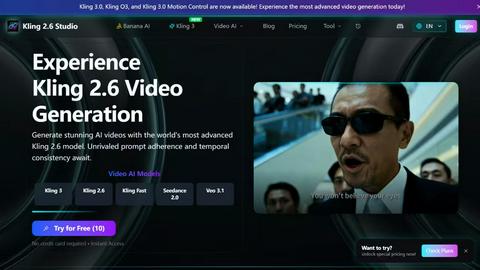
Kling 2.6 generates stunning AI videos with unrivaled prompt adherence and temporal consistency.
Last updated: April 4, 2026

Renderly
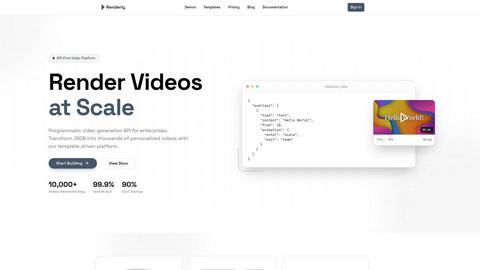
Renderly automates video production at scale, generating thousands of personalized videos quickly and cost-effectively.
Last updated: February 25, 2026
Visual Comparison
Kling 2.6
Renderly
Feature Comparison
Kling 2.6
Unrivaled Temporal Consistency
Kling 2.6 sets a new industry standard by mastering one of the most challenging aspects of AI video: maintaining coherence over time. The model expertly handles scene transitions and object persistence, ensuring that elements do not morph, flicker, or disappear illogically between frames. This results in smooth, believable videos where the narrative flow remains intact, providing a solid foundation for professional use cases where visual stability is non-negotiable.
Cinematic Motion and Dynamics
The model excels at generating sophisticated camera movements and natural object dynamics. Whether it's a slow dolly in on a detailed subject or capturing the windy atmosphere of a meadow, Kling 2.6 produces motion that feels intentional and cinematic. This goes beyond simple animation, offering users the ability to imply story and emotion through dynamic movement directly from a text prompt, elevating the production value of AI-generated content.
Deep Scene Understanding
Kling 2.6's advanced video engine demonstrates a profound comprehension of complex prompts. It doesn't just recognize individual objects; it understands their relationships, context, and intended action within a scene. This deep understanding ensures that every element described in your prompt is not only present but is animated and integrated perfectly, leading to highly accurate and detailed video synthesis that closely matches the creator's intent.
Rapid Generation with Kling Fast
For workflows that demand speed without sacrificing quality, the integrated Kling Fast mode delivers high-quality video iterations in seconds. This feature is essential for rapid prototyping, brainstorming, and iterating on creative concepts, allowing users to explore multiple visual ideas quickly. It maintains the core motion quality and coherence of the standard model, making it an indispensable tool for efficient content creation.
Renderly
API-First Architecture
Renderly boasts a RESTful API designed specifically for high-volume video generation, allowing developers to seamlessly integrate video capabilities into their applications. This architecture ensures that users can programmatically create videos with ease, making it suitable for both small projects and large-scale enterprises.
Template Management
With a centralized template library, Renderly provides users the ability to manage video templates effectively. This feature supports version control and JSON configuration, enabling dynamic content replacement based on user data, which is essential for personalized video production.
Scalable Infrastructure
Renderly operates on a cloud-native platform that features auto-scaling capabilities. This means that whether you need to render one video or 100,000, Renderly can handle the load without any performance dips, ensuring reliability during peak times.
Credit-Based Billing
Renderly offers a transparent, pay-per-render pricing model that includes volume discounts for enterprise customers. This billing approach allows users to only pay for what they render, making it a cost-effective solution for businesses of all sizes.
Use Cases
Kling 2.6
Short-Form Marketing and Social Media Content
Creators and brands can leverage Kling 2.6 to produce eye-catching, 5-second promotional videos, product showcases, or social media ads. Its ability to quickly generate visually coherent and dynamic clips from a simple text description makes it ideal for platforms like Instagram Reels, TikTok, and YouTube Shorts, where engaging, high-impact visual content is key to capturing audience attention.
Concept Visualization and Storyboarding
Filmmakers, game developers, and designers can use Kling 2.6 to rapidly visualize concepts and create dynamic storyboards. By translating written scenes or descriptive prompts into moving visuals, teams can explore creative directions, pitch ideas, and align on visual style before committing to costly production phases, streamlining the pre-production workflow significantly.
Animated Art and Experimental Video
Digital artists and animators can employ the model as a creative partner to generate unique animated art pieces, music visualizations, or experimental video loops. The model's strength in handling diverse styles—from 2D animation to surreal, cinematic realism—opens new avenues for artistic expression, allowing for the creation of visually stunning content that would be time-prohibitive to produce manually.
Educational and Explainer Video Prototypes
Educators and content developers can prototype simple explainer videos or illustrative animations for educational purposes. By describing a scientific concept, historical event, or a step-by-step process, Kling 2.6 can generate a clear, consistent visual aid that enhances learning materials and makes complex information more accessible and engaging for viewers.
Renderly
Personalized Marketing Campaigns
Companies can utilize Renderly to create personalized marketing videos for their customers. By inputting customer data into the platform, businesses can automatically generate tailored video content that speaks directly to individual preferences, increasing engagement and conversion rates.
Social Media Content Generation
Social media managers can leverage Renderly to produce bulk video content for various platforms. By automating the rendering of multiple videos at once, teams can maintain a consistent posting schedule without the need for extensive manual labor.
Dynamic Data Visualizations
Data-driven organizations can benefit from Renderly's ability to create motion graphics that visualize complex datasets. By transforming JSON data into engaging videos, companies can present their findings in a more digestible and visually appealing format.
E-Learning and Training Videos
Educational institutions and corporations can use Renderly to automate the production of training videos. By utilizing templates and pre-defined content, they can quickly generate instructional materials that are both informative and visually engaging, enhancing the learning experience.
Overview
About Kling 2.6
Kling 2.6 is a state-of-the-art generative AI video model designed to transform text and image prompts into stunning, high-fidelity video content. As part of the Kling AI suite, it represents a significant leap in video synthesis technology, offering creators, marketers, filmmakers, and businesses a powerful tool to produce professional-grade video assets rapidly and efficiently. Its core value proposition lies in delivering unparalleled prompt adherence and exceptional temporal consistency, two areas where previous AI video generators often faltered. Kling 2.6 understands complex scene descriptions and animates every element with remarkable coherence, ensuring objects and characters maintain their identity and logical placement throughout the generated clip. With support for 5-second videos at 720p resolution in a landscape (16:9) format, it provides a robust foundation for creating compelling short-form content, prototypes, and visual concepts. The model is engineered for users who demand cinematic motion, deep scene comprehension, and reliable outputs that faithfully translate creative vision into moving visuals, positioning itself as a leader in the competitive AI video generation landscape.
About Renderly
Renderly is an innovative video infrastructure platform designed to revolutionize the way developers and creators produce video content. By automating video production at scale, Renderly eliminates the need for tedious manual rendering processes. This API-first platform is particularly beneficial for enterprises looking to generate personalized videos, bulk social media content, and data-driven motion graphics quickly and efficiently. With its robust template-driven architecture, users can transform JSON data into thousands of customized videos, allowing for high-volume production without compromising on quality. Renderly’s commitment to performance is evident in its impressive uptime SLA of 99.9% and the ability to render over 10,000 videos daily. By integrating Renderly into your workflow, you can reduce costs by up to 90% compared to traditional video rendering solutions, making it a go-to choice for those aiming to scale video content creation.
Frequently Asked Questions
Kling 2.6 FAQ
What is the maximum video length and resolution for Kling 2.6?
Based on the provided information, the Kling 2.6 Professional Suite generates videos that are 5 seconds in duration at a resolution of 720p. The output is formatted in a landscape aspect ratio of 16:9. This format is optimized for creating concise, high-quality clips suitable for digital platforms and prototyping.
How does Kling 2.6 ensure good prompt adherence?
Kling 2.6 utilizes a deep scene understanding capability within its AI architecture. This allows the model to parse complex text prompts, comprehend the relationships between described objects and actions, and faithfully animate each element within the correct context. The result is a high degree of accuracy between the user's written intent and the final visual output.
What is the difference between Kling 2.6 and Kling Fast?
Kling 2.6 refers to the full, advanced video generation model focused on delivering the highest quality motion and consistency. Kling Fast is a specialized mode within the Kling 2.6 ecosystem that prioritizes generation speed, producing video iterations in seconds while striving to maintain the core motion quality and coherence of the standard model for rapid ideation.
Can I use an image as a starting point with Kling 2.6?
Yes, the Kling 2.6 Professional Suite supports both text-to-video and image-to-video generation workflows. You can provide an image as a visual prompt, and the model will animate it based on any additional text instructions you provide, allowing for greater creative control and the ability to build upon existing visual assets.
Renderly FAQ
What types of videos can I create with Renderly?
Renderly allows users to create a wide range of video types, including personalized marketing videos, social media content, motion graphics, and training videos, all tailored to specific audience needs.
How does Renderly ensure high-quality video rendering?
Renderly employs advanced rendering technology and a robust cloud-native infrastructure to guarantee high-quality video outputs. The platform is designed to handle high-volume rendering efficiently while maintaining visual fidelity.
Is Renderly easy to integrate with existing systems?
Yes, Renderly's RESTful API is designed for seamless integration with existing systems and applications. Comprehensive documentation, webhooks, and SDKs are provided to facilitate a smooth onboarding process for developers.
What kind of support does Renderly offer for its users?
Renderly offers extensive support through detailed documentation, a dedicated help center, and responsive customer service. Users can access resources to help them maximize the platform's capabilities and address any technical issues.
Alternatives
Kling 2.6 Alternatives
Kling 2.6 is a leading AI video generation platform, renowned for its ability to create high-quality, dynamic video content from simple text prompts. It operates within the rapidly evolving category of text-to-video and image-to-video AI tools, where it has set a high bar for visual fidelity and coherence. Users often explore alternatives to Kling 2.6 for a variety of practical reasons. These can include budget constraints, as premium AI video tools often operate on subscription models. Others may seek different feature sets, such as specific export formats, longer video generation capabilities, or integration with other creative software. Platform accessibility, including web-based versus desktop applications, and regional availability are also common deciding factors. When evaluating an alternative, it is crucial to assess several key criteria. Prioritize the tool's core output quality, particularly its handling of motion and temporal consistency between frames. Consider the learning curve and the intuitiveness of the interface, as this impacts workflow efficiency. Finally, examine the pricing structure and any usage limits to ensure it aligns with your project volume and creative needs.
Renderly Alternatives
Renderly is an innovative video infrastructure platform that automates video production at scale, making it easier for developers and creators to produce high-quality video content efficiently. As an API-first solution, it caters to enterprises looking to streamline their video generation processes, particularly for personalized and bulk content. Users often seek alternatives to Renderly for various reasons, including pricing considerations, specific feature requirements, or the need for compatibility with existing platforms and workflows. When evaluating alternatives, it's essential to consider factors such as the ease of integration, scalability, template management capabilities, and overall value for money to ensure a solution meets unique production needs.