
FuturePost vs Proofapp
Side-by-side comparison to help you choose the right product.

FuturePost
FuturePost lets you send private letters to your future self, capturing your dreams and reflections for tomorrow.
Last updated: February 25, 2026

Proofapp
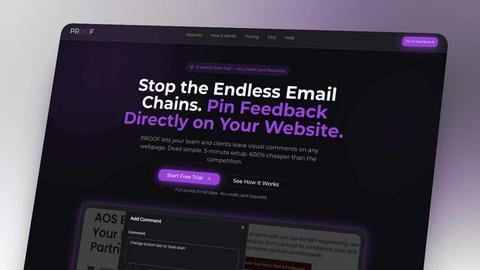
Proof lets teams and clients leave contextual comments directly on website screenshots, streamlining the design review and approval process.
Visual Comparison
FuturePost

Proofapp
Overview
About FuturePost
FuturePost is an innovative digital platform designed to help individuals pause, reflect, and send letters to their future selves. This service is ideal for dreamers seeking to set intentions, reflectors wanting to capture their current emotions, encouragers needing to send motivational messages, and storytellers wishing to document their journeys. The main value proposition of FuturePost lies in its commitment to being 100% free, with absolutely no hidden fees or ads. Users can securely schedule letters to be delivered on a future date, ensuring their thoughts and feelings remain private and encrypted. Built as a passion project by entrepreneur Ayush Soni, FuturePost is not just a tool but a purpose-driven initiative aimed at fostering meaningful self-reflection without the burden of cost. Thousands have already embraced this opportunity to connect with their future selves, making it a valuable resource for personal growth.
About Proofapp
Proof is a visual feedback and website review platform that helps designers, developers, and their clients collaborate more efficiently. Upload any website URL and Proof automatically captures desktop and mobile screenshots. Reviewers can pin comments directly on the design, reply in threads, attach files, and resolve feedback — all without needing an account. Features include real-time notifications, Slack integration, multi-page support, customizable accent colors, and a generous free tier. Whether you're a freelancer collecting client feedback or an agency managing multiple projects, Proof eliminates the confusion of scattered emails and vague revision notes by keeping all feedback visual, organized, and actionable.