
documentorium vs Requestly
Side-by-side comparison to help you choose the right product.

documentorium
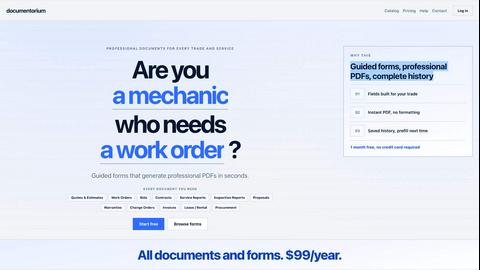
Documentorium creates professional contractor documents and PDFs instantly through guided, trade-specific forms.
Last updated: March 26, 2026

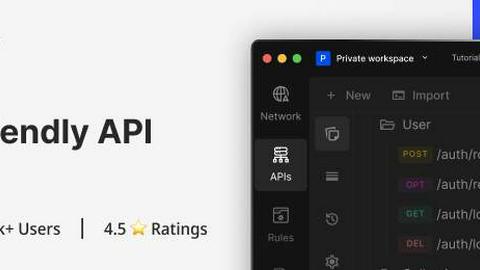
Requestly is a local-first, git-native API client with AI features and free team collaboration, offering a lightweight alternative to Postman.
Last updated: March 26, 2026
Visual Comparison
documentorium
Requestly
Feature Comparison
documentorium
Trade-Specific Guided Forms
Documentorium provides over 200 templates across 26 trade categories, with each form containing fields built specifically for that profession. Instead of generic blanks, users find relevant line items, terminology, and sections tailored for electrical work, plumbing, HVAC, roofing, and more. This guided approach ensures completeness, accuracy, and professionalism, removing the guesswork from document creation and ensuring all critical details for the job are captured.
Instant Professional PDF Generation
Once a form is completed, documentorium instantly converts the input into a clean, branded, and print-ready PDF document. Users no longer need to struggle with word processor formatting, alignment, or layout issues. The engine handles all design elements, producing a polished final product that can be immediately sent to clients, printed for on-site use, or saved for records, all within seconds of form submission.
Complete Document History & Prefill
Every document created is automatically saved in the user's personal history within the platform. This archive allows for easy retrieval, viewing, and re-downloading of past documents. Furthermore, this history enables intelligent prefill for future documents, saving time on repetitive client or job information. The system builds a valuable database of your work over time, streamlining recurring service reports, invoices, or follow-up quotes.
Simple, All-Access Annual Pricing
Documentorium operates on a straightforward, transparent pricing model. For one annual subscription fee, users gain full, unrestricted access to the entire catalog of documents and forms. There are no confusing tiers, per-document charges, or feature limitations. This simple approach provides cost certainty and allows tradespeople to use any document they need, whenever they need it, without worrying about incremental costs.
Requestly
Git-Native Collections
Requestly revolutionizes API collaboration by storing collections as plain text files (in JSON format) on your local file system. This design allows you to place these files under Git version control. Teams can now branch, merge, commit, and review changes to their API specifications and test suites using the same familiar workflows they apply to their codebase. This eliminates the lock-in and sync issues associated with proprietary cloud storage, providing transparency, history, and robust collaboration directly through your existing DevOps tools.
Local-First & Login-Free Architecture
Prioritizing developer privacy and immediacy, Requestly operates on a local-first principle. No account or login is required to start using the application; you can download it and begin testing APIs within seconds. All your data—collections, environments, variables, and logs—resides securely on your local machine. This approach not only enhances security and performance by eliminating network latency for basic operations but also ensures you have full ownership and portability of your data at all times.
AI-Native API Development
Requestly incorporates artificial intelligence directly into the API workflow to accelerate development. The built-in AI can intelligently assist in composing complex requests, automatically generating test cases based on responses, and helping debug issues by analyzing API behavior. This embedded intelligence reduces manual effort, helps prevent errors, and allows developers, whether novice or expert, to work more efficiently and focus on building rather than on repetitive configuration tasks.
Comprehensive API Protocol Support
The tool offers robust support for both REST and GraphQL APIs, catering to modern backend architectures. For GraphQL, it provides a sophisticated client with schema introspection and auto-completion, making it easy to explore types and build valid queries. For all API types, it includes powerful features like pre-request and post-response scripts for dynamic request manipulation and response processing, environment variables for configuration management across different stages, and a collection runner for automating batch tests and workflows.
Use Cases
documentorium
Creating a Detailed Service Proposal
A solar installation company can use documentorium to generate a comprehensive, professional proposal for a residential client. By selecting the solar-specific proposal template, the guided form will include relevant sections for system specifications, energy production estimates, financing options, warranty details, and terms & conditions. This results in a credible document that builds client trust and clearly outlines the project scope and value.
Issuing On-Site Work Orders and Invoices
An HVAC technician completing a repair can quickly generate a work order on a mobile device to document the service performed, parts used, and labor hours. Upon job completion, the same information can be seamlessly used to create a detailed invoice. The trade-specific fields ensure all necessary data is captured, and the instant PDF can be emailed to the client before the technician leaves the property, accelerating payment.
Managing Contract and Change Order Workflow
A general contractor can utilize documentorium to draft a solid project contract using a construction-specific template. Later, if the client requests a modification, the contractor can efficiently create a formal change order document that details the revised scope, adjusted costs, and updated timeline. This professional process manages client expectations, protects the business, and maintains clear documentation throughout the project lifecycle.
Streamlining Inspection and Service Reporting
A home inspector or electrician performing a safety inspection can fill out a dedicated inspection report form. The guided template prompts for all necessary checks, code compliance notes, and recommendations. The resulting professional PDF report can be delivered instantly to the property owner or real estate agent, providing immediate value and demonstrating thoroughness and expertise.
Requestly
Team-Based API Development and Review
Development teams can use Requestly's Git-native feature to collaboratively build and maintain API collections. Backend and frontend developers, or QA engineers, can work within a shared Git repository. Changes to endpoints, parameters, or test scripts can be proposed via branches and merged after review, ensuring consistency and quality in API contracts and integration tests. This use case formalizes API testing as part of the code review process.
Secure and Private API Testing in Regulated Industries
For organizations in finance, healthcare, or enterprise software where data sovereignty and security are paramount, Requestly's local-first architecture is ideal. Sensitive API keys, authentication tokens, and proprietary request/response data never get transmitted to or stored on third-party cloud servers. Developers can conduct thorough testing and debugging entirely offline, complying with strict internal security policies and regulatory requirements without compromising on tool capability.
Seamful Migration from Postman
Teams feeling constrained by Postman's licensing, cloud dependency, or collaboration costs can use Requestly for a frictionless transition. The one-click import feature seamlessly brings over collections, environments, and scripts. Teams can then immediately benefit from local storage, Git integration, and free collaboration features without losing their historical work, making the switch a practical and low-risk decision to regain control and reduce tooling expenses.
Automated API Testing and CI/CD Integration
Developers and DevOps engineers can integrate Requestly collections into Continuous Integration and Deployment pipelines. Since collections are stored as files in a Git repo, they can be checked out during build processes. The Requestly CLI or collection runner can be invoked to execute a suite of API tests against development, staging, or production environments, providing automated validation of API health and contract adherence with every code change.
Overview
About documentorium
Documentorium is a specialized document engine designed exclusively for skilled trades and service professionals. It eliminates the inefficiency and unprofessionalism of starting from a blank page or adapting generic templates. The platform serves electricians, plumbers, contractors, HVAC technicians, roofers, solar installers, and a wide range of other field service experts. Its core value proposition is delivering trade-specific, guided forms that generate polished, print-ready PDF documents in seconds. With a comprehensive catalog of over 200 templates across 26 trade categories, documentorium ensures every field—from quotes and estimates to work orders, contracts, and inspection reports—is purpose-built for the user's specific trade. This focused approach saves significant time, reduces errors, and projects a credible, professional image to clients. By handling the entire document lifecycle from guided creation to instant PDF generation and secure history storage, documentorium allows tradespeople to focus on their craft while streamlining their business administration.
About Requestly
Requestly is a modern, developer-centric API client engineered for teams who prioritize performance, privacy, and seamless collaboration. It serves as a powerful, lightweight alternative to traditional cloud-based clients like Postman, built on a foundational principle of local-first architecture. This means all your sensitive API collections, environment variables, and request histories are stored directly on your machine as standard files, ensuring your data never leaves your control unless you choose to share it. Designed for the modern development workflow, Requestly integrates natively with Git, allowing teams to version control their API collections, create branches, and review changes through pull requests just as they do with their source code. It is AI-native, embedding intelligent assistance to help developers craft requests, generate tests, and debug APIs with unprecedented speed. Supporting both REST and GraphQL with full schema introspection, and equipped with features like pre/post-request scripts, environment variables, and a collection runner, Requestly provides a comprehensive toolkit for API development and testing. Its generous free tier includes essential team collaboration features such as shared workspaces and role-based access control, making professional-grade API management accessible without a login barrier. Trusted by over 300,000 developers at leading companies including Microsoft, Amazon, and Google, Requestly is the definitive choice for teams seeking a fast, secure, and collaborative API workflow.
Frequently Asked Questions
documentorium FAQ
Can I cancel my subscription anytime?
Yes, you can cancel your subscription at any time directly from your account settings. Your access to the platform will remain active until the end of your current billing period. There are no penalties or lock-in contracts, providing you with complete flexibility and control over your subscription.
What happens to my documents if I don't subscribe after the trial?
Your existing documents are not deleted. They remain securely stored in your account history, where you can view and download them at any time. The subscription is required to create and edit new documents. The free trial allows you to evaluate the platform's capabilities without risking the loss of any work you've already completed.
Is documentorium a substitute for legal advice?
No. Documentorium provides professional document tools and templates for generation and formatting. It is not a law firm and does not provide legal advice. The templates are designed for common business scenarios, but for complex contractual matters, it is always recommended to consult with a qualified legal professional to ensure your documents meet all specific legal requirements.
Do you offer a free trial?
Yes, documentorium offers a one-month free trial with full access to every document and form in the catalog. No credit card is required to start the trial. This allows you to thoroughly test the platform, create real documents for your business, and experience the time-saving benefits before making any financial commitment.
Requestly FAQ
How does Requestly's collaboration work if data is stored locally?
Requestly enables collaboration through shared Git repositories. Team members clone a repository containing the Requestly collection files. When someone makes changes, they commit and push to a branch, creating a pull request for team review. Once approved and merged, others can pull the updates to their local machines. The application itself also offers shared workspace synchronization via secure peer-to-peer or cloud-optional sync for real-time collaboration, while keeping the source of truth in version-controlled files.
Is Requestly really free for team collaboration?
Yes, a core differentiator of Requestly is that its free tier includes robust team collaboration features. This includes the ability to create shared workspaces, invite team members, and utilize role-based access control (RBAC) to assign Admin, Editor, or Viewer permissions. This stands in contrast to many competitors who restrict advanced collaboration to paid enterprise plans, making Requestly an exceptionally cost-effective solution for startups and development teams.
Can I import my existing Postman data into Requestly?
Absolutely. Requestly provides a straightforward, one-click import process specifically designed for Postman users. You can easily import your complete Postman collections, including all requests, folders, associated environment variables, and pre-request/test scripts. This ensures a smooth and immediate transition, allowing you to leverage Requestly's enhanced features without having to manually recreate your existing API testing infrastructure.
What makes Requestly a "lightweight" alternative to Postman?
Requestly is considered lightweight due to its focused architecture. It avoids the feature bloat and mandatory cloud synchronization that can slow down other clients. By operating locally-first, it launches quickly and performs operations without network delays for data access. Its interface is designed for efficiency, and it does not require a persistent user login or account dashboard for core functionality, resulting in a faster, more responsive developer experience dedicated specifically to API workflows.
Alternatives
documentorium Alternatives
documentorium is a specialized document engine within the productivity and management software category, designed to help tradespeople generate professional estimates, invoices, and reports. Users often explore alternatives for various reasons, such as seeking different pricing models, needing specific integrations with accounting or scheduling platforms, or requiring a different set of features beyond core document generation. When evaluating an alternative solution, it's crucial to consider several key factors. Look for software that offers templates and fields tailored to your specific trade, not just generic forms. Assess the overall value, including the quality of the final documents, ease of use, and how well the tool integrates into your existing business workflow to save time and reduce administrative overhead.
Requestly Alternatives
Requestly is a local-first, git-controlled API client designed for modern development teams. It belongs to the category of developer tools, specifically API testing and development platforms. It prioritizes data ownership and seamless integration into existing development workflows by storing collections as version-controlled files. Developers may seek alternatives to any tool for various reasons, including specific feature requirements, budget constraints, platform compatibility, or differing philosophies on data privacy and collaboration. The ideal tool varies based on team size, workflow complexity, and integration needs within the broader development ecosystem. When evaluating alternatives, key considerations include the tool's approach to data storage and security, its collaboration model, pricing transparency, and support for essential API standards like REST and GraphQL. The ability to integrate with version control systems and CI/CD pipelines is also a critical factor for teams practicing DevOps.